
Modern businesses depend on technology more than ever before. From cloud computing and artificial intelligence to cybersecurity and data analytics, organizations rely on complex digital systems to operate efficiently and remain competitive. However, implementing and managing these technologies requires expertise that many companies do not have internally.
This is where technology consulting becomes essential. Technology consulting firms help businesses design strategies, optimize IT infrastructure, adopt emerging technologies, and solve complex technical challenges. By partnering with experienced technology consultants, organizations can modernize systems, reduce risk, and scale their operations effectively in an increasingly digital economy.
What Is Technology Consulting?
Definition of Technology Consulting
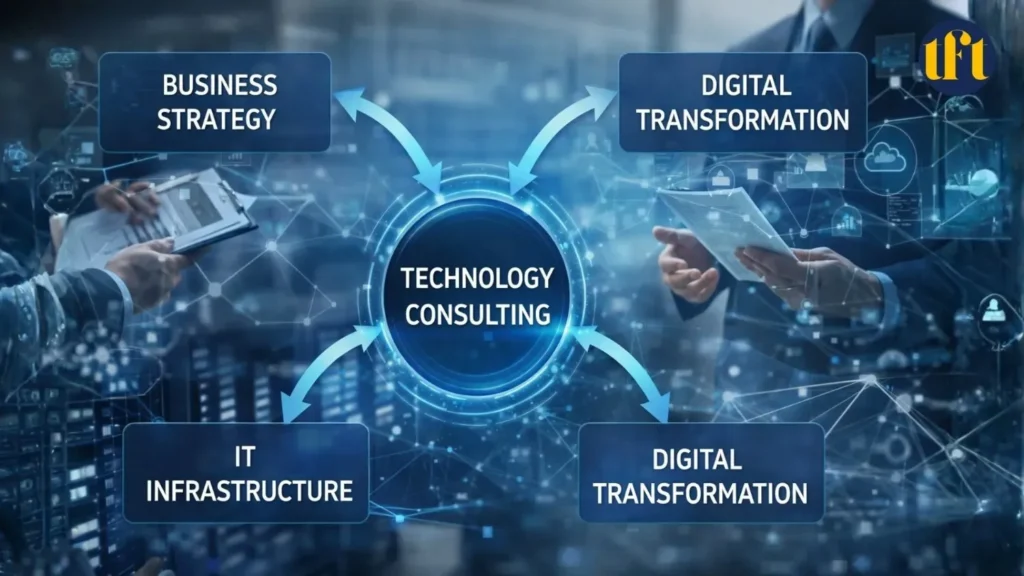
Technology consulting refers to professional advisory services that help businesses plan, implement, and optimize their technology strategies. These services include IT consulting services, digital transformation consulting, cloud migration consulting, cybersecurity consulting, and enterprise technology consulting.
A technology consulting company works with organizations to identify technological challenges and opportunities. Consultants evaluate existing systems, recommend improvements, and guide implementation projects that enhance operational performance and innovation.
Many businesses rely on technology consulting services to align their technology investments with business objectives. This ensures that companies not only adopt new tools but also maximize their value.
Technology consulting firms often provide expertise in areas such as:
- IT strategy consulting
- cloud infrastructure consulting
- enterprise architecture consulting
- cybersecurity strategy
- data analytics consulting
- automation consulting
Ultimately, technology consulting helps organizations use technology as a strategic driver for growth.
Technology Consulting vs IT Consulting vs Management Consulting
Technology consulting is often confused with IT consulting or management consulting, but each serves a different role within business operations.
| Consulting Type | Focus | Typical Services | Primary Goal |
| Technology Consulting | Technology strategy and digital innovation | Cloud migration, AI consulting, system modernization | Enable digital transformation |
| IT Consulting | IT infrastructure and operations | Network management, system administration | Maintain and optimize IT systems |
| Management Consulting | Business strategy and organizational performance | Business strategy, process optimization | Improve overall business performance |
Technology consulting focuses heavily on digital transformation strategy and emerging technologies, while IT consulting primarily supports operational systems. Management consulting, on the other hand, addresses broader organizational challenges.
Technology consultants often collaborate with both IT teams and executive leadership to ensure that technology initiatives support business goals.
Why Technology Consulting Exists in Modern Businesses
Technology evolves rapidly. New tools, platforms, and security risks emerge every year. Most companies cannot maintain specialized expertise across every technological domain.
Technology consulting firms exist to bridge this gap. They provide access to highly skilled professionals who specialize in areas like AI strategy consulting, cloud transformation consulting, cybersecurity risk management, and enterprise technology strategy consulting.
Organizations also hire consultants to avoid costly mistakes during complex technology projects. For example, implementing enterprise software or migrating to a multi-cloud infrastructure requires careful planning and technical expertise.
By working with experienced consultants, businesses gain the guidance needed to implement technology solutions efficiently and securely.
What Does a Technology Consultant Do?
Core Responsibilities of Technology Consultants
A technology consultant performs a wide range of strategic and technical tasks. Their primary responsibility is to help organizations identify and implement the best technology solutions for their needs.
Typical responsibilities include:
- conducting technology assessment services
- developing technology roadmap development strategies
- advising on enterprise technology solutions
- guiding system integration consulting projects
- supporting application modernization consulting
- managing technology implementation services
Consultants analyze existing systems and identify opportunities to improve efficiency and scalability. They also help businesses adopt innovative technologies such as artificial intelligence and automation.
In many cases, consultants also act as technology advisors for executive leadership teams.
Typical Day-to-Day Work of a Technology Consultant
The daily work of a technology consultant varies depending on the project and industry. However, most consultants spend their time analyzing data, meeting with stakeholders, and designing technology solutions.
A typical day may include reviewing system architecture, conducting risk assessments, collaborating with developers, and advising business leaders on technology strategy.
Technology consultants also work closely with IT teams to ensure the smooth implementation of new systems. They often provide documentation, training, and support during major digital transformation projects.
In many cases, consultants serve as the bridge between business objectives and technical execution.
Enterprise Software and Technology Implementation Support
Enterprise software systems play a central role in modern business operations. Platforms such as ERP, CRM, and enterprise data systems help organizations manage complex processes.
Technology consultants assist companies with enterprise software selection, implementation, and optimization. This process often involves:
- evaluating software vendors
- designing integration architectures
- managing deployment projects
- ensuring compatibility with existing systems
For example, enterprise platforms such as Microsoft Dynamics, Salesforce, and SAP often require specialized consulting expertise during implementation.
Consultants ensure these systems integrate properly with business workflows and provide long-term value.
Why Businesses Need Technology Consulting
Improving Operational Efficiency
One of the most common reasons companies hire technology consultants is to improve operational efficiency. Inefficient systems can slow down productivity and increase costs.
Technology consultants evaluate existing processes and recommend tools that streamline workflows. Automation, data integration, and cloud computing often play major roles in these improvements.
By modernizing legacy systems and optimizing IT infrastructure, organizations can significantly improve performance.
Strengthening Data Security and Risk Management
Cybersecurity threats continue to grow across every industry. Data breaches and cyberattacks can cause significant financial and reputational damage.
Technology consulting firms provide cybersecurity consulting, security risk assessment, and cyber risk management services to protect organizations from these threats.
Consultants design security frameworks that include:
- network security consulting
- data protection consulting
- compliance and security consulting
- enterprise security solutions
These measures help organizations protect sensitive data and maintain regulatory compliance.
Scaling IT Infrastructure for Growth
As businesses grow, their technology infrastructure must scale accordingly. Expanding organizations often require new systems, cloud environments, and automation tools.
Technology consultants design scalable architectures that support growth. This includes implementing enterprise cloud solutions, a hybrid cloud strategy, and infrastructure modernization projects.
Scalable infrastructure ensures that businesses can expand operations without experiencing system limitations.
Ensuring Business Continuity and Disaster Recovery
Unexpected disruptions can severely impact business operations. Natural disasters, cyberattacks, or system failures can cause costly downtime.
Technology consultants help organizations develop disaster recovery and business continuity plans. These strategies ensure that critical systems remain operational even during unexpected events.
Consultants also implement backup systems and cloud redundancy solutions to minimize risks.
Reducing Technology Costs and Increasing ROI
Technology investments can be expensive. Without proper planning, organizations may overspend on unnecessary tools or inefficient infrastructure.
Technology consulting firms help businesses reduce technology costs and increase return on investment. Consultants evaluate existing systems, identify redundancies, and recommend cost-effective alternatives.
Cloud optimization services and infrastructure modernization projects often result in significant savings.
Technology Consulting Services
Technology Strategy and Enterprise Architecture
Technology strategy consulting focuses on aligning technology initiatives with business goals. Consultants work with leadership teams to design long-term technology strategies.
Enterprise architecture consulting plays a critical role in this process. It involves designing the structure of an organization’s IT environment to ensure scalability, security, and performance.
These strategies help organizations build sustainable digital ecosystems.
Digital Transformation Consulting
Digital transformation consulting helps organizations transition from traditional systems to modern digital platforms. This process often includes adopting cloud computing, automation, and advanced analytics.
Consultants evaluate business processes and identify opportunities for digital innovation consulting.
Digital transformation initiatives often include:
- workflow automation
- data analytics integration
- customer experience platforms
These technologies enable businesses to operate more efficiently and deliver better services.
Cloud Migration and Cloud Optimization
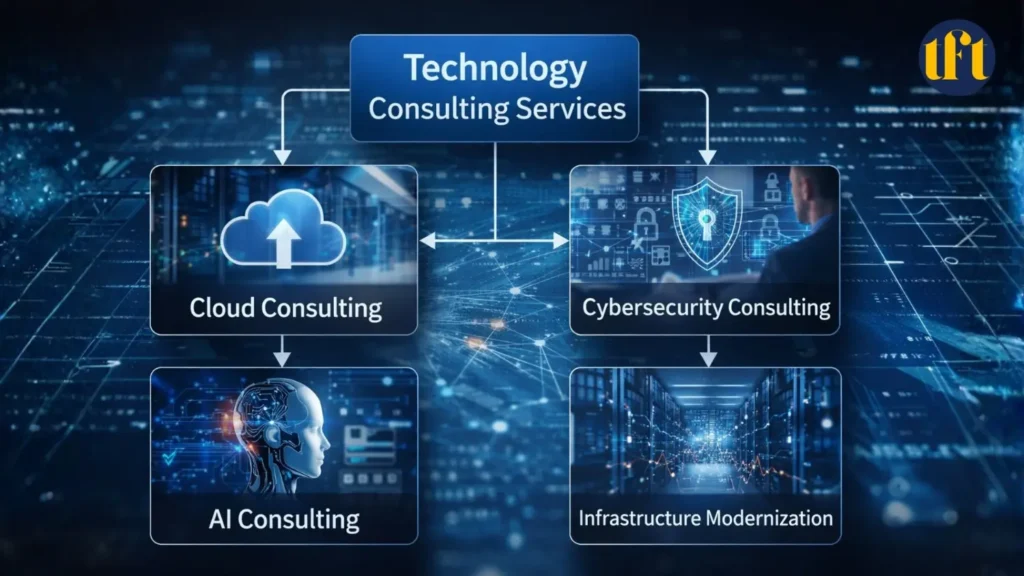
Cloud computing has become the foundation of modern IT infrastructure. Many organizations rely on cloud consulting services, cloud migration consulting, and cloud optimization services to transition from legacy systems to cloud environments.
Technology consultants design multi-cloud strategies and hybrid cloud strategies that maximize flexibility and reliability.
Cloud transformation consulting helps organizations manage infrastructure efficiently while reducing operational costs.
Cybersecurity and Information Security Services
Cybersecurity consulting protects organizations from cyber threats. Consultants assess vulnerabilities and design security frameworks that safeguard sensitive data.
Information security consulting services often include:
- threat detection systems
- security monitoring solutions
- compliance frameworks
- identity and access management
These services ensure that businesses maintain strong security standards across their digital environments.
Data, Artificial Intelligence, and Emerging Technologies
Many organizations are adopting advanced technologies such as artificial intelligence, machine learning, and predictive analytics.
Technology consultants help businesses implement AI strategy consulting, machine learning consulting, and predictive analytics consulting.
These technologies enable organizations to analyze data more effectively and make smarter decisions.
IT Infrastructure Modernization
Legacy infrastructure can limit business growth. Technology consultants assist organizations with infrastructure modernization and IT modernization consulting.
This process includes upgrading hardware systems, implementing cloud-based environments, and improving network performance.
Modern infrastructure ensures that businesses remain competitive and resilient.
Application and System Implementation
Many organizations rely on custom software applications to manage operations. Consultants provide software consulting services and application modernization consulting to support these systems.
They assist with software design, development, integration, and deployment.
Effective implementation ensures that applications function properly and support business objectives.
Technology Change Management
Introducing new technology can be challenging for organizations. Employees may resist change or struggle to adapt to new systems.
Technology change management focuses on helping organizations transition smoothly. Consultants provide training, documentation, and support to ensure successful adoption.
This process helps maximize the benefits of new technologies.
Disaster Recovery and Risk Assessment
Technology consultants conduct risk assessments to identify vulnerabilities in IT systems. These assessments help organizations prepare for potential disruptions.
Disaster recovery strategies often include cloud backups, system redundancy, and emergency response plans.
These safeguards protect business operations and ensure long-term stability.
Technology Integration Platforms
Modern businesses often use multiple technology platforms simultaneously. Integration platforms help connect these systems and enable data sharing.
Technology consultants design integration architectures that ensure compatibility between software applications, databases, and cloud environments.
This integration improves efficiency and data accuracy.
Sector Expertise in Technology Consulting
Software Industry Consulting
Software companies rely heavily on technology consulting services to optimize development processes and infrastructure.
Consultants assist with cloud architecture, DevOps consulting, and software performance optimization.
These services enable software companies to deliver high-quality products efficiently.
Hardware and Semiconductor Consulting
Hardware manufacturers and semiconductor companies face unique technological challenges. Consultants help these organizations optimize production systems and supply chain technologies.
Advanced analytics and automation tools often play a critical role in semiconductor industry consulting.
IT Services and Digital Infrastructure
Organizations that provide IT services must maintain a robust digital infrastructure. Technology consultants assist with network design, cloud infrastructure consulting, and cybersecurity strategy.
These services ensure reliable system performance and security.
Cloud Computing and Platform Ecosystems
Cloud platforms such as AWS, Microsoft Azure, and Google Cloud have transformed modern IT environments.
Technology consultants help businesses implement and manage cloud ecosystems effectively. They design scalable architectures and optimize cloud resource usage.
Key Technologies Driving Modern Technology Consulting
Artificial Intelligence and Machine Learning
Artificial intelligence has become a powerful tool for businesses seeking competitive advantages.
AI consulting services help organizations implement machine learning models, automate workflows, and analyze data more effectively.
These technologies enable smarter decision-making and improved operational efficiency.
Blockchain and Smart Contracts
Blockchain technology enables secure and transparent digital transactions. Some organizations use blockchain consulting services to implement decentralized systems and smart contracts.
Industries such as finance and supply chain management benefit from blockchain applications.
Enterprise Platforms (Microsoft, Salesforce, etc.)
Enterprise software platforms play a central role in modern organizations. Technology consultants assist businesses with platform implementation and integration.
Platforms such as Microsoft Dynamics, Salesforce, and SAP provide tools for customer relationship management, enterprise resource planning, and analytics.
Consultants ensure these platforms integrate seamlessly with business processes.
Types of Technology Consultants
Cybersecurity Consultants
Cybersecurity consultants specialize in protecting organizations from digital threats. They design security frameworks and monitor systems for vulnerabilities.
Their work often includes security audits, penetration testing, and incident response planning.
IT Infrastructure Consultants
Infrastructure consultants focus on optimizing hardware systems, networks, and cloud environments.
They help organizations design scalable and secure infrastructure architectures.
Software Development Consultants
Software consultants assist with application development, system integration, and software architecture design.
Their expertise helps organizations build reliable and scalable software solutions.
Cloud and DevOps Consultants
Cloud consultants specialize in cloud architecture and infrastructure management.
DevOps consultants focus on automation, continuous integration, and continuous deployment pipelines.
These experts help organizations accelerate software development and improve system reliability.
What Types of Companies Use Technology Consulting?
Startups and High-Growth Companies
Startups often rely on technology consulting to build scalable infrastructure quickly.
Consultants help startups implement cloud systems, automation tools, and cybersecurity frameworks.
Mid-Size Businesses Scaling Technology
Growing companies often require advanced technology strategies to support expansion.
Technology consultants design systems that support increased demand and operational complexity.
Large Enterprises Undergoing Digital Transformation
Large enterprises frequently undertake complex digital transformation projects.
Technology consulting firms provide the expertise required to modernize systems and implement advanced technologies.
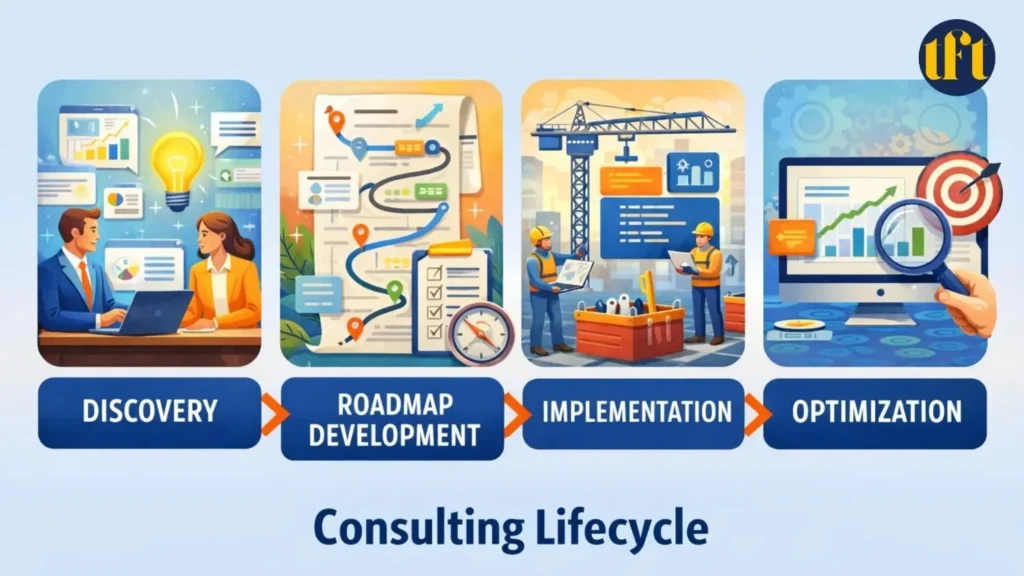
How Technology Consulting Projects Work
Solution Discovery and Technology Assessment
Technology consulting projects typically begin with a discovery phase. Consultants analyze business objectives, existing systems, and technical challenges.
This stage helps identify opportunities for improvement.
Technology Roadmap Development
After the discovery phase, consultants create a technology roadmap. This roadmap outlines the steps required to implement new systems and technologies.
The roadmap also includes timelines, resource requirements, and expected outcomes.
System Modernization and Migration
Modernization projects often involve migrating legacy systems to cloud environments or replacing outdated software platforms.
Consultants manage these migrations carefully to minimize disruption.
Implementation and Optimization
Once systems are implemented, consultants monitor performance and optimize configurations.
This ensures that organizations receive maximum value from their technology investments.
Attributes of Successful Technology Consultants
Technical Expertise and Coding Knowledge
Successful consultants possess strong technical skills, including programming, system architecture design, and cloud engineering.
These skills enable consultants to develop effective technology solutions.
Client-Facing Communication Skills
Technology consultants must communicate complex technical concepts clearly to business leaders.
Strong communication skills help consultants build trust and maintain productive client relationships.
Analytical and Critical Thinking Ability
Consultants analyze complex systems and identify opportunities for improvement.
Strong analytical skills enable them to solve challenging technical problems.
Adaptability and Continuous Learning
Technology evolves rapidly. Consultants must continually update their knowledge and adapt to new tools and platforms.
Continuous learning ensures that consultants remain effective in a constantly changing industry.
Alignment With Client Values and Goals
Successful consulting engagements require alignment between consultants and clients.
Consultants must understand organizational goals and design solutions that support those objectives.
Career Path in Technology Consulting
Education and Degree Requirements
Many technology consultants hold degrees in computer science, information technology, or engineering.
Advanced degrees in business or technology management can also be beneficial.
Certifications and Technical Skills
Certifications demonstrate expertise in specific technologies. Popular certifications include cloud platform credentials, cybersecurity certifications, and project management certifications.
These credentials enhance credibility and career opportunities.
Gaining Industry Experience
Practical experience plays a critical role in developing consulting expertise. Many professionals begin their careers in IT roles before transitioning into consulting.
Experience with enterprise systems, software development, or infrastructure management provides valuable insights.
Technology Consultant Salary and Job Outlook
The demand for technology consultants continues to grow as businesses adopt advanced technologies.
According to industry reports, experienced consultants can earn competitive salaries and enjoy strong job prospects in the consulting industry technology sector.
Benefits of Technology Consulting for Organizations
Accelerating Digital Transformation
Technology consultants help organizations adopt new technologies quickly and effectively.
This acceleration allows businesses to remain competitive in rapidly evolving markets.
Building Competitive Advantage Through Technology
Organizations that leverage technology effectively gain significant competitive advantages.
Consultants help companies identify innovative solutions that enhance productivity and customer experience.
Access to Specialized Expertise
Technology consulting firms provide access to experts with specialized knowledge.
This expertise allows organizations to tackle complex technical challenges without hiring large internal teams.
Long-Term Technology Strategy and Innovation
Consultants help organizations design long-term strategies that support innovation and growth.
These strategies ensure that businesses remain adaptable in changing technological landscapes.
The Future of Technology Consulting
AI-Driven Business Transformation
Artificial intelligence will continue transforming industries across the globe.
Technology consulting firms are increasingly helping organizations integrate AI into business operations.
Cloud Cost Optimization and Infrastructure Efficiency
As cloud adoption grows, organizations will focus more on cloud cost optimization and infrastructure efficiency.
Consultants will play a crucial role in helping businesses manage cloud resources effectively.
Emerging Cybersecurity Challenges
Cyber threats continue to evolve rapidly. Technology consultants will remain essential in helping organizations strengthen cybersecurity strategies.
Advanced security frameworks and monitoring tools will become increasingly important.
The Role of Quantum and Next-Generation Technologies
Emerging technologies such as quantum computing may significantly impact industries in the coming decades.
Technology consultants will help organizations evaluate these technologies and prepare for their potential impact.
Frequently Asked Questions
1. What industries benefit most from technology consulting?
Industries such as healthcare, finance, manufacturing, and software development benefit significantly from technology consulting. These sectors rely heavily on digital systems and require specialized expertise to manage complex infrastructure.
2. How do companies choose the right technology consulting firm?
Organizations should evaluate consulting firms based on experience, industry expertise, and proven results. A reputable technology consulting firm will demonstrate strong technical capabilities and a track record of successful projects.
3. How long do technology consulting projects typically take?
Project timelines vary depending on complexity. Some consulting engagements last a few weeks, while large digital transformation initiatives may span several months or even years.