

Real estate investment trusts, commonly known as REITs, are a major force in the U.S. property and investment market. Millions of investors rely on REITs to gain exposure to real estate without buying physical property. But beyond investing opportunities, many people are curious about the employment side of the industry. A common question asked by students, finance professionals, and career changers is simple: How many jobs are available in real estate investment trusts?
The answer reveals an industry that supports tens of thousands of professionals across finance, property management, construction, legal services, and technology. REIT companies manage massive portfolios of commercial, residential, and specialized properties across the United States. As a result, they require a large workforce that ranges from analysts and asset managers to leasing consultants and executive leadership.
This guide explains the size of the REIT workforce, job opportunities, career paths, salary expectations, and future outlook for professionals interested in working in the REIT sector. By the end, you will have a clear understanding of how the industry operates and whether a career in REITs is the right move for you.
Understanding Real Estate Investment Trusts (REITs)
What Are Real Estate Investment Trusts?
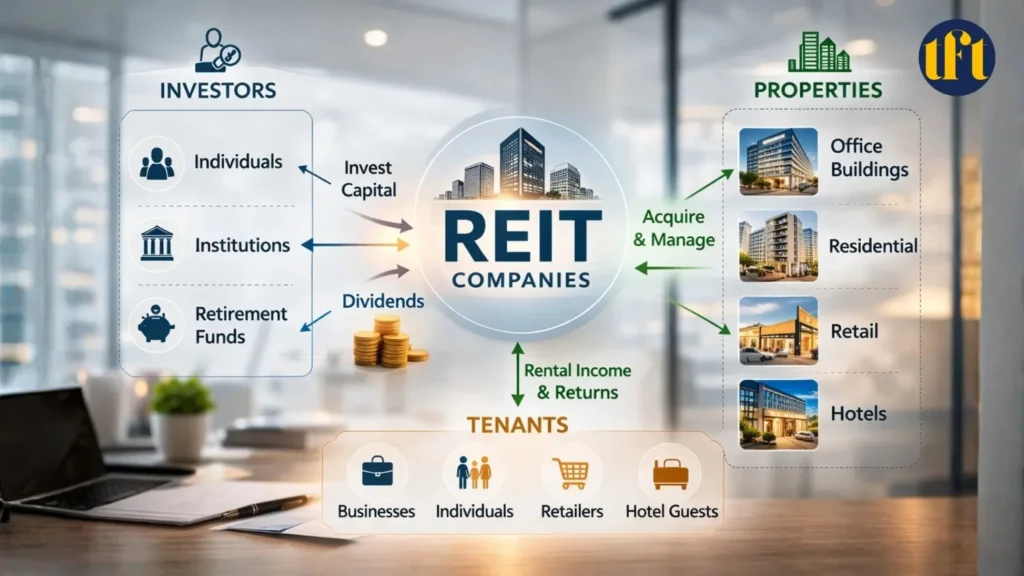
A real estate investment trust (REIT) is a company that owns, finances, or operates income producing real estate. These companies allow individuals to invest in large scale real estate projects such as office buildings, apartments, hospitals, warehouses, and shopping centers.
REITs were created in the United States in 1960 through legislation that made it easier for everyday investors to participate in commercial real estate markets. Instead of purchasing properties directly, investors buy shares in REIT companies. These companies collect rent and distribute a large portion of profits to shareholders as dividends.
Most REITs are publicly traded on major stock exchanges, which means they operate similarly to other publicly listed corporations. According to Nareit (National Association of Real Estate Investment Trusts), the U.S. REIT market represents hundreds of billions of dollars in assets and plays a critical role in the commercial real estate market.
How REITs Make Money
REIT companies generate revenue primarily through rental income from properties they own or manage. These companies typically acquire or develop properties, lease them to tenants, and collect rent payments.
Here are the main revenue streams for REITs:
- Rental income from commercial or residential properties
- Property appreciation and asset sales
- Mortgage interest from real estate loans
- Management fees from property operations
To qualify as a REIT under U.S. tax regulations, companies must distribute at least 90 percent of taxable income to shareholders. This requirement makes REITs popular among investors seeking consistent dividend income.
Why Investors and Businesses Use REITs
REITs provide several advantages to both investors and businesses.
For investors, they offer:
- Access to diversified real estate portfolios
- Passive income through dividends
- Liquidity through publicly traded shares
For businesses and developers, REITs provide:
- Access to large pools of capital
- Professional property management
- Efficient portfolio expansion
Because of these benefits, the real estate investment trust market continues to grow, which in turn creates increasing employment opportunities.
Types of Real Estate Investment Trusts
REIT companies specialize in different property sectors. Each sector requires professionals with specific expertise.
Industrial REITs
Industrial REITs invest in warehouses, logistics centers, and distribution facilities. These properties support supply chains, manufacturing, and ecommerce operations.
Companies in this category often employ:
- logistics property managers
- real estate investment analysts
- asset managers
- leasing specialists
The rise of ecommerce has significantly increased demand for industrial properties, making this one of the fastest growing REIT sectors.
Residential REITs
Residential REITs own apartment complexes, rental communities, and housing developments. These properties generate consistent rental income from tenants.
Employment opportunities often include:
- property managers
- leasing consultants
- community operations staff
- financial analysts
Residential REITs benefit from steady housing demand across major cities.
Commercial REITs
Commercial REITs manage office buildings, shopping centers, and mixed use developments. These properties generate revenue from business tenants and retailers.
Professionals working in commercial REIT companies may include:
- real estate acquisition specialists
- portfolio managers
- marketing managers
- investor relations teams
Commercial real estate remains one of the largest segments of the REIT industry.
Hospitality REITs
Hospitality REITs invest in hotels, resorts, and vacation properties. Revenue in this sector depends heavily on travel trends and tourism demand.
Typical employment roles include:
- hotel property management
- financial planning professionals
- operations managers
- hospitality asset managers
Healthcare and Medical REITs
Healthcare REITs focus on medical facilities such as hospitals, senior housing communities, and outpatient clinics.
These properties require specialized expertise in healthcare real estate, which creates demand for:
- healthcare facility managers
- regulatory compliance specialists
- financial analysts
With an aging population in the United States, healthcare REITs continue to expand.
How Many Jobs Are Available in Real Estate Investment Trusts?
Estimated Number of Jobs in the REIT Industry
When asking how many jobs are available in real estate investment trusts, it is important to consider both direct and indirect employment.
According to industry reports and Nareit data, REITs support over 300,000 direct jobs in the United States. When including indirect employment through property services, construction, and operations, the number rises to more than 3 million jobs.
These jobs span many areas of expertise, including finance, real estate development, law, marketing, and technology.
Size of the U.S. REIT Market and Employment Demand
The REIT industry has grown into a major economic sector. Today, there are 200+ publicly traded REIT companies in the United States with combined assets exceeding $3 trillion in real estate value.
Because these companies operate large property portfolios, they require a significant workforce to manage operations.
Below is an overview of employment levels associated with REIT activities.
| Category | Estimated Employment Impact |
| Direct REIT company employees | 300,000+ |
| Property management staff | 1,000,000+ |
| Construction and development roles | 1,200,000+ |
| Support and service industries | 700,000+ |
This demonstrates that the REIT industry employment ecosystem is vast, supporting millions of professionals across multiple sectors.
Job Growth Trends in the REIT Sector
Several trends are driving REIT sector employment demand:
- Expansion of ecommerce warehouses
- Increased demand for rental housing
- Growth of healthcare real estate
- Data center and technology infrastructure properties
These trends indicate that the number of jobs in the REIT industry will continue increasing in the coming years.
Key Job Categories Within Real Estate Investment Trusts
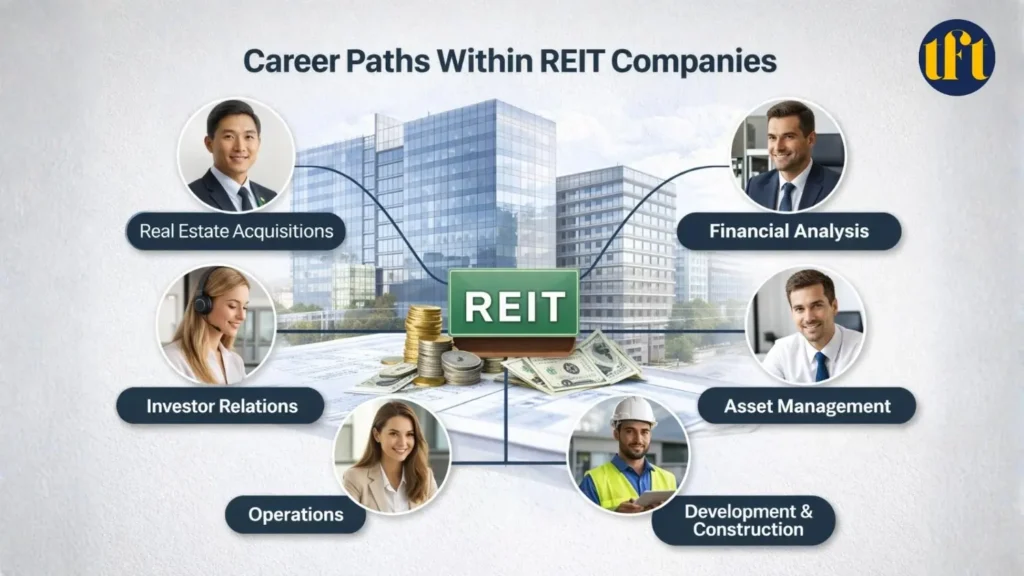
REIT companies require professionals from many disciplines. Below are the major employment categories in the industry.
Investment and Finance Roles
Finance professionals play a critical role in REIT portfolio management. They evaluate property investments, analyze risk, and manage financial performance.
Typical roles include:
- REIT analyst
- real estate investment analyst
- portfolio manager
- financial analyst real estate
- asset manager real estate
These professionals help guide major investment decisions.
Property and Asset Management Roles
Property management professionals oversee day to day operations of buildings and rental communities.
Common roles include:
- property manager jobs
- leasing consultant
- facilities manager
- operations manager
These roles ensure properties remain profitable and well maintained.
Development and Construction Roles
Many REIT companies actively develop new properties.
Key development positions include:
- real estate developer jobs
- construction project managers
- acquisition specialists
- urban planning consultants
Legal, Compliance, and Regulatory Roles
Real estate investments involve significant legal requirements. REIT companies employ attorneys and compliance specialists to ensure regulatory compliance.
Important roles include:
- real estate attorney
- compliance officer
- regulatory analyst
Marketing and Investor Relations Roles
REIT companies must maintain strong communication with investors and stakeholders.
These teams include:
- Investor Relations Manager REIT
- marketing managers
- communications specialists
Information Technology and Data Analytics Roles
Technology plays an increasing role in real estate investment decisions.
Key technology roles include:
- data analysts
- real estate technology specialists
- software engineers
Corporate and Administrative Support Roles
Like any large organization, REIT companies also require HR, accounting, and administrative professionals.
Top High-Paying Jobs in Real Estate Investment Trusts
Certain roles in the REIT industry offer particularly high earning potential.
Chief Executive Officer (CEO)
The CEO oversees company strategy, investment decisions, and overall performance. Compensation often includes base salary, bonuses, and stock incentives.
Chief Financial Officer (CFO)
The CFO manages financial strategy, capital allocation, and investor reporting.
Chief Operating Officer (COO)
The COO supervises daily operations across property portfolios.
Real Estate Acquisition Specialist
These professionals identify and evaluate potential property purchases.
Real Estate Investment Analyst
Investment analysts research markets and assess property performance.
Portfolio Manager
Portfolio managers oversee property investment strategies and asset allocation.
Investor Relations Manager
This role communicates financial results and strategy to investors.
Real Estate Attorney
Attorneys handle property transactions, compliance, and legal risk.
Real Estate Developer
Developers manage construction projects and new property investments.
Property Manager
Property managers oversee rental properties and tenant relationships.
Leasing Consultant
Leasing consultants attract tenants and manage rental agreements.
Real Estate Agent
Agents facilitate property sales and acquisitions.
Skills and Qualifications Needed for REIT Careers
Educational Backgrounds for REIT Professionals
Most REIT professionals hold degrees in fields such as:
- finance
- real estate
- business administration
- economics
- urban planning
Graduate degrees such as an MBA can further enhance career prospects.
Technical and Analytical Skills
Professionals in the REIT industry often require specialized skills, including:
- financial modeling
- investment analysis skills
- property valuation
- market research
Soft Skills Employers Value
Strong interpersonal and strategic thinking skills are essential.
Important soft skills include:
- communication
- negotiation
- problem solving
- teamwork
Salary Expectations and Career Growth in REITs
Average Salary Ranges by Role
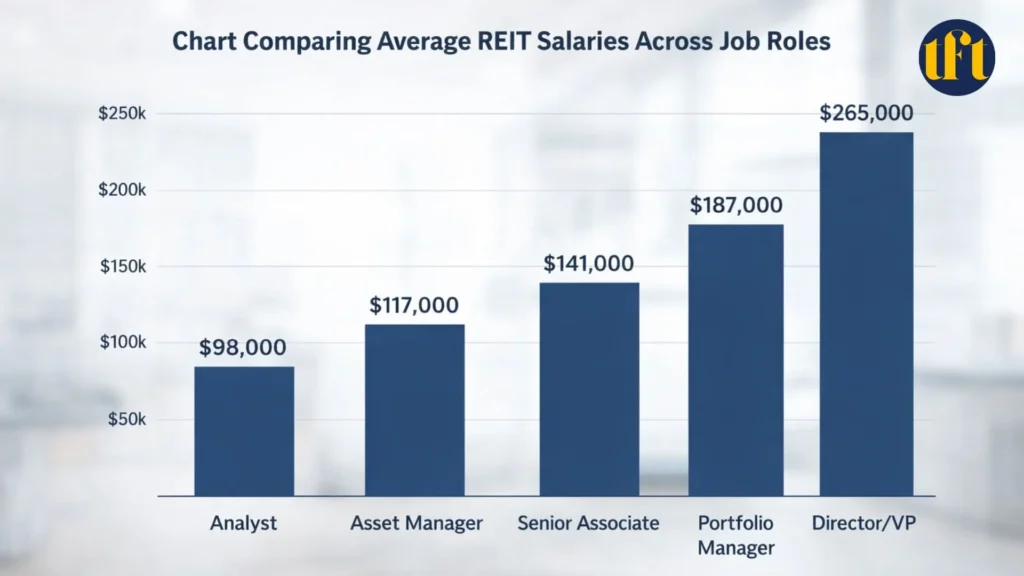
Below is a comparison of common roles and salary expectations.
| Job Title | Average Salary |
| REIT Analyst | $70,000 – $120,000 |
| Property Manager | $60,000 – $100,000 |
| Portfolio Manager | $120,000 – $200,000 |
| Acquisition Specialist | $90,000 – $160,000 |
| Real Estate Attorney | $120,000 – $220,000 |
Factors That Influence Pay in REIT Careers
Several factors determine salary levels:
- company size
- geographic location
- years of experience
- property portfolio value
Career Progression and Advancement Opportunities
Professionals can advance from entry level analyst positions to senior leadership roles over time.
A common career path may look like:
analyst → asset manager → portfolio manager → executive leadership
How to Start a Career in Real Estate Investment Trusts
Entry Points for New Graduates
Graduates can start in roles such as:
- financial analyst
- property management trainee
- research analyst
Career Transitions from Other Fields
Professionals from finance, banking, and real estate brokerage often transition into REIT careers.
Networking and Industry Certifications
Networking with industry professionals is essential. Certifications can also enhance credibility.
Examples include:
- CFA
- real estate licenses
- property management certifications
Professional Licensing and Credentials
Some roles require specific licenses, especially for brokerage or legal positions.
Where to Find Jobs in Real Estate Investment Trusts
REIT job opportunities can be found through several channels:
- company career pages
- financial services job boards
- LinkedIn professional networks
- real estate industry associations
Many publicly traded REIT companies regularly post openings for analysts, managers, and support staff.
Advantages of Working in the REIT Industry
Career Stability and Market Demand
Real estate remains one of the most stable long term investment sectors.
Opportunities for Advancement
Large REIT companies provide clear career advancement pathways.
Performance Bonuses and Competitive Salaries
Compensation packages often include bonuses tied to portfolio performance.
Diversity of Career Paths
Professionals can pursue careers in finance, operations, development, or technology within the same industry.
Challenges of Working in Real Estate Investment Trusts
Market and Economic Risks
Real estate markets can be influenced by interest rates and economic cycles.
Competitive Job Market
Top REIT companies attract highly qualified candidates.
Industry Regulations and Compliance
The industry must comply with complex financial regulations.
Future Outlook of the REIT Industry and Job Market
Sustainability and Green Building Trends
Environmental sustainability is becoming a priority for real estate developers.
Technological Innovation in Real Estate
Proptech platforms and data analytics are transforming property management.
Urbanization and Changing Work Patterns
Urban development and hybrid work environments are shaping new real estate demands.
Healthcare and Aging Population Demand
Healthcare real estate is expanding due to demographic shifts.
Ecommerce Impact on Industrial and Retail REITs
The growth of ecommerce continues to drive demand for warehouse and logistics properties.
Regulatory and Economic Changes
Government policies and interest rates will continue to influence industry growth.
Is Real Estate Investment Trusts a Good Career Path?
For many professionals, the answer is yes. The REIT sector offers strong salaries, diverse career opportunities, and long term industry growth.
Because real estate is a fundamental part of the economy, employment opportunities in REIT companies remain stable even during economic fluctuations.
Professionals who enjoy finance, property investment, and strategic analysis may find the REIT industry particularly rewarding.
Frequently Asked Questions (FAQs)
1. How many jobs are available in real estate investment trusts?
The REIT industry supports over 300,000 direct jobs in the United States, with millions more in related property services, construction, and support industries.
2. How big is the REIT industry in the United States?
The U.S. REIT market manages trillions of dollars in real estate assets and includes more than 200 publicly traded REIT companies.
3. How much do REIT employees earn?
Salaries vary widely depending on the role. Entry level analysts may earn around $70,000 annually, while executives and portfolio managers can earn over $200,000.
4. What qualifications are required to work in a REIT?
Common qualifications include degrees in finance, business, or real estate. Certifications such as CFA or property management credentials can also improve job prospects.
5. How can beginners start a career in REITs?
Beginners can start in entry level roles such as financial analyst, research assistant, or property management trainee.
Conclusion
The real estate investment trust industry is a major employer within the broader real estate and finance sectors. With hundreds of thousands of direct jobs and millions of related roles, the REIT workforce supports property development, investment analysis, and property management across the United States.
As demand for real estate assets continues to grow, so does the need for skilled professionals who can manage these investments effectively. From financial analysts and portfolio managers to property managers and developers, the industry offers diverse career opportunities with strong earning potential.
For individuals interested in real estate investment careers, the REIT sector provides a dynamic and rewarding path with long term growth potential.